The Cleanest and Most Sustainable Beaches in Phuket
The cleanest beach in Phuket can change after storms, tides, and busy weekends. This guide focuses on beaches that usually feel cleaner, calmer, and easier to visit responsibly, with practical eco-score notes on conservation, facilities, crowd pressure, and low-impact habits.
Mai Khao and Nai Yang, because Sirinat National Park gives the north a stronger conservation frame.
Nai Thon, Layan, and Surin often feel cleaner because they have more space and less nightlife pressure.
Kata, Kamala, Bang Tao, and Nai Yang when you want facilities without making a mess of the day.
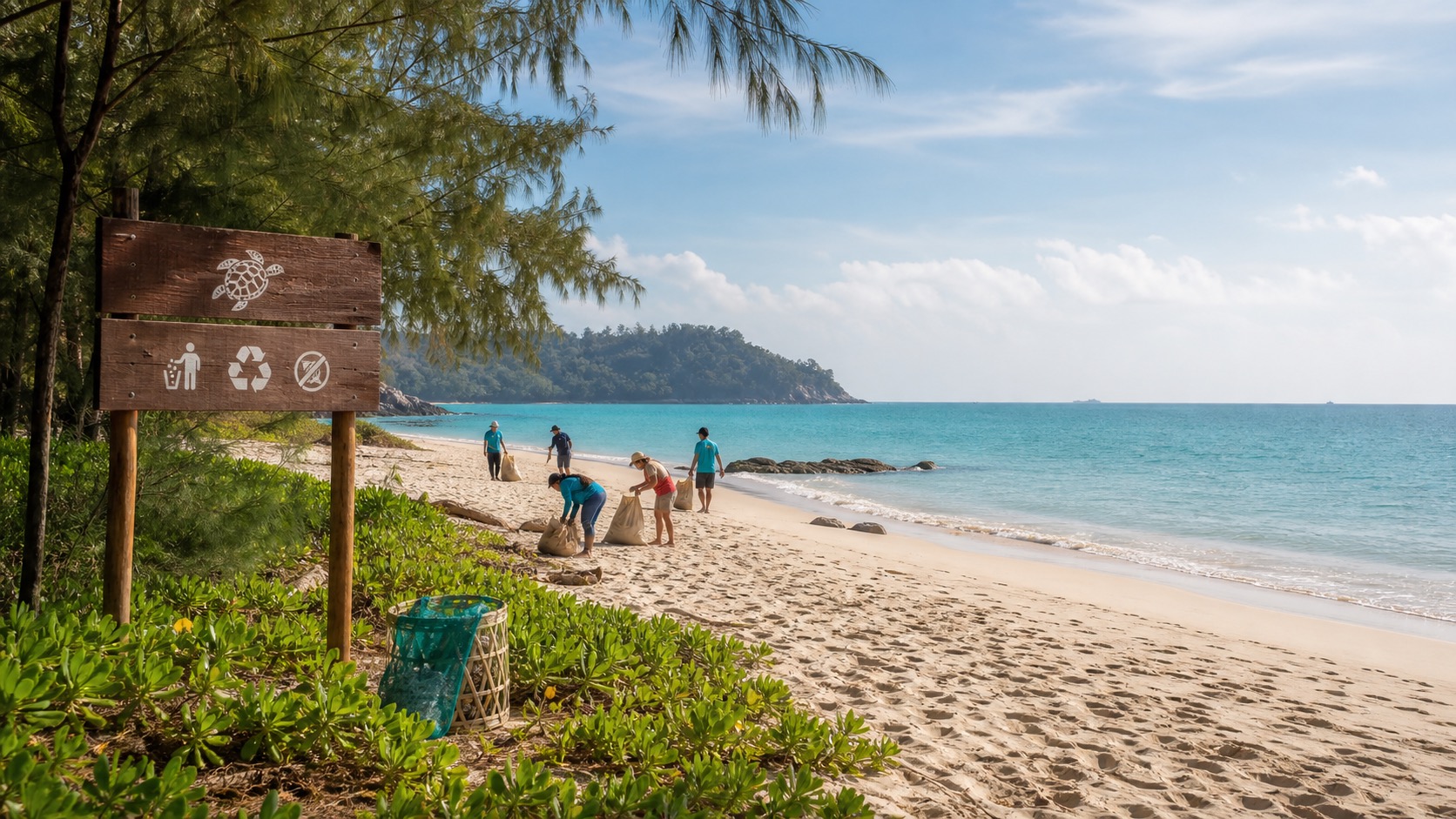
No beach is self-cleaning. Pack out waste, avoid single-use plastic, and respect red flags.
Clean Beaches Are About More Than Clear Water
In Phuket, a clean beach is not just a pretty photo. Rain can wash debris out of canals, monsoon waves can bring marine litter ashore, and a crowded holiday weekend can change the sand overnight. So instead of pretending there is one permanent “cleanest beach,” this guide looks at beaches that usually have a cleaner feel, better natural setting, lower crowd pressure, or a stronger conservation story.
Use this guide with the best Phuket beaches guide, family beaches guide, Phuket packing list, and quiet hidden beaches guide if you want beach days that feel good without adding pressure to the island.
Quick Eco Rule
The most sustainable beach is usually the one you can visit with the least waste, least driving, and least disturbance. Choose close, refill your bottle, avoid feeding wildlife, and leave the sand cleaner than you found it.
What Clean and Sustainable Means
How to judge beaches without greenwashing
For this guide, I score beaches by four practical signals: natural setting, crowd pressure, facilities or management, and how easy it is to visit without creating extra waste. The official Tourism Authority of Thailand Phuket guide is useful for broad planning, but local conditions still change by weather and season.
- Natural setting: less hard development directly on the sand, more trees, dunes, or national park context.
- Crowd pressure: fewer peak-hour crowds means less litter, less noise, and less damage around access points.
- Facilities: toilets, bins, managed zones, and nearby food can reduce random waste when handled well.
- Visitor behavior: the beach is only sustainable if travelers bring less, take waste away, and avoid harming marine life.
Think of the eco-score as a planning tool, not a scientific water-quality certificate. After heavy rain or storms, always use your eyes and common sense before swimming.
The Best Eco-Score Beaches
Mai Khao, Nai Yang, Layan, Nai Thon, Surin and more
These beaches are not perfect, but they are the first places I would compare if you want a cleaner-feeling Phuket beach day. For hotel-area planning, cross-check with the west coast vs east coast guide before booking too far from your daily routine.
1. Mai Khao Beach — Eco-Score: 9/10
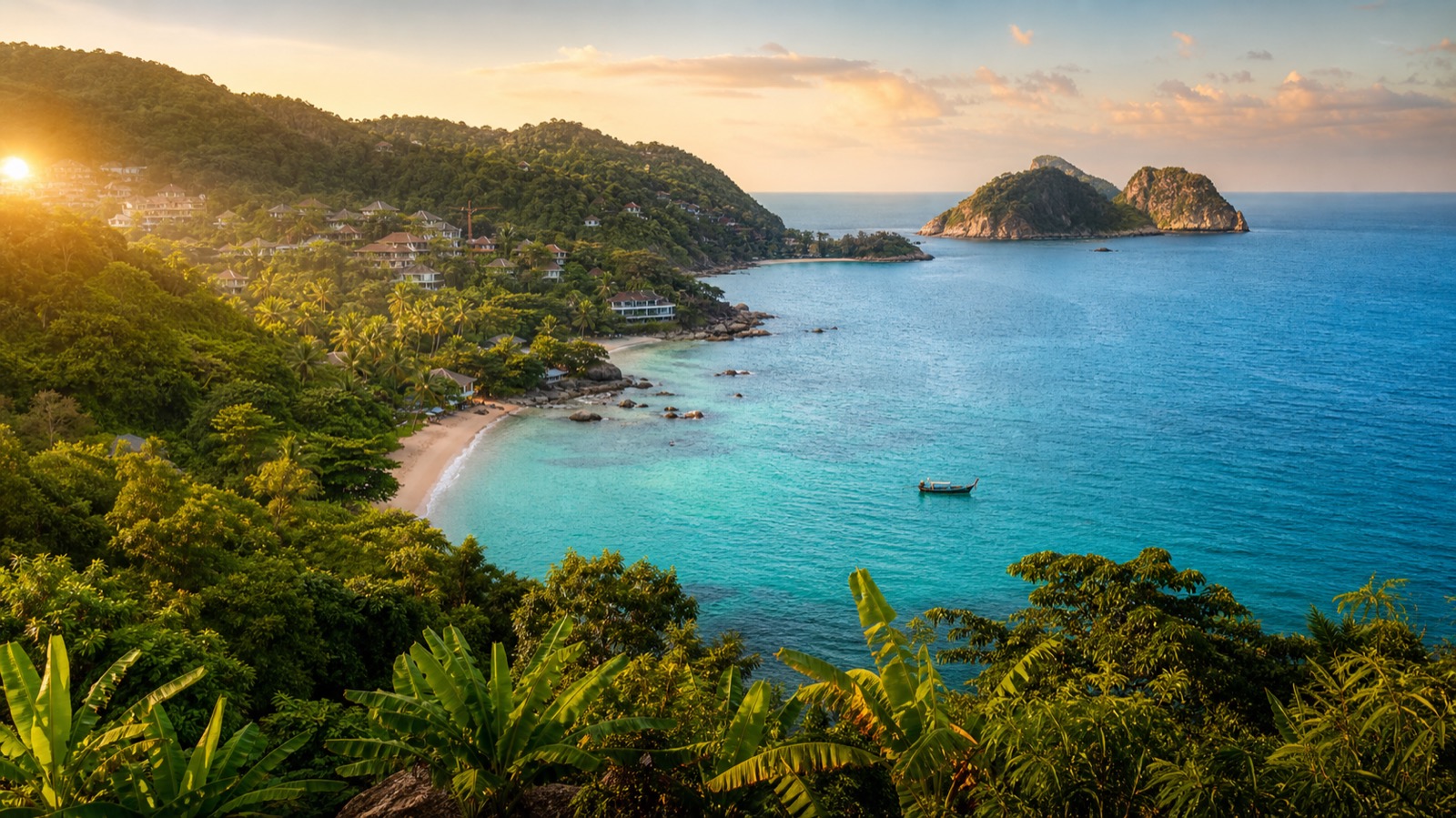
Mai Khao is Phuket's strongest sustainability pick because it has scale, low crowd density, and Sirinat National Park context. It is also connected to turtle conservation awareness in the north. The tradeoff is swimming: the beach shelves steeply and can be rough, so it is better for walking, space, and sunsets than casual family swimming.
2. Nai Yang Beach — Eco-Score: 8.5/10
Nai Yang combines national park edges, shade, local food, and easier facilities than Mai Khao. It is one of the better choices when you want a clean-feeling beach day without driving across the island or creating a complicated logistics plan.
3. Layan Beach — Eco-Score: 8/10
Layan, at the northern end of Bang Tao, gives you more space and a gentler natural feel than the busier central resort strip. It is not wild, but it is a good low-impact compromise if you are staying around Laguna or Bang Tao.
4. Nai Thon Beach — Eco-Score: 8/10
Nai Thon feels cleaner because it has fewer large crowds, a small village rhythm, and enough space for a proper beach day. It suits couples and repeat visitors who want a cleaner-feeling west-coast beach without going completely remote.
5. Surin Beach — Eco-Score: 7.5/10
Surin has a polished natural look, clear water in high season, and fewer heavy nightlife pressures than Patong. It can still get busy, but it remains one of the better-maintained-feeling famous beaches.
6. Nai Harn Beach — Eco-Score: 7.5/10
Nai Harn benefits from a green setting, local use, and less beachfront hotel pressure. It is popular, so the cleanest experience is early morning or outside major holiday peaks.
7. Kata Beach — Eco-Score: 7/10
Kata is not hidden or untouched, but it can be a responsible choice because you can walk to food, hotels, and services instead of driving all day. The cleaner choice is often the beach that reduces transport and single-use convenience stops.
8. Kamala Beach — Eco-Score: 7/10
Kamala works for travelers who want a village-style base, easier food, and a slower family pace than Patong. It is not the wildest beach, but it can be practical and lower-impact if you stay nearby and keep your beach routine simple.
Beach-by-Beach Eco Notes
Conservation, crowd pressure, facilities, and waste habits
The cleanest beach for you depends on how you travel. A remote beach can become less sustainable if you drive two hours, buy plastic snacks, and leave waste behind. A developed beach can be lower-impact if you walk from your hotel, refill water, and use proper facilities.
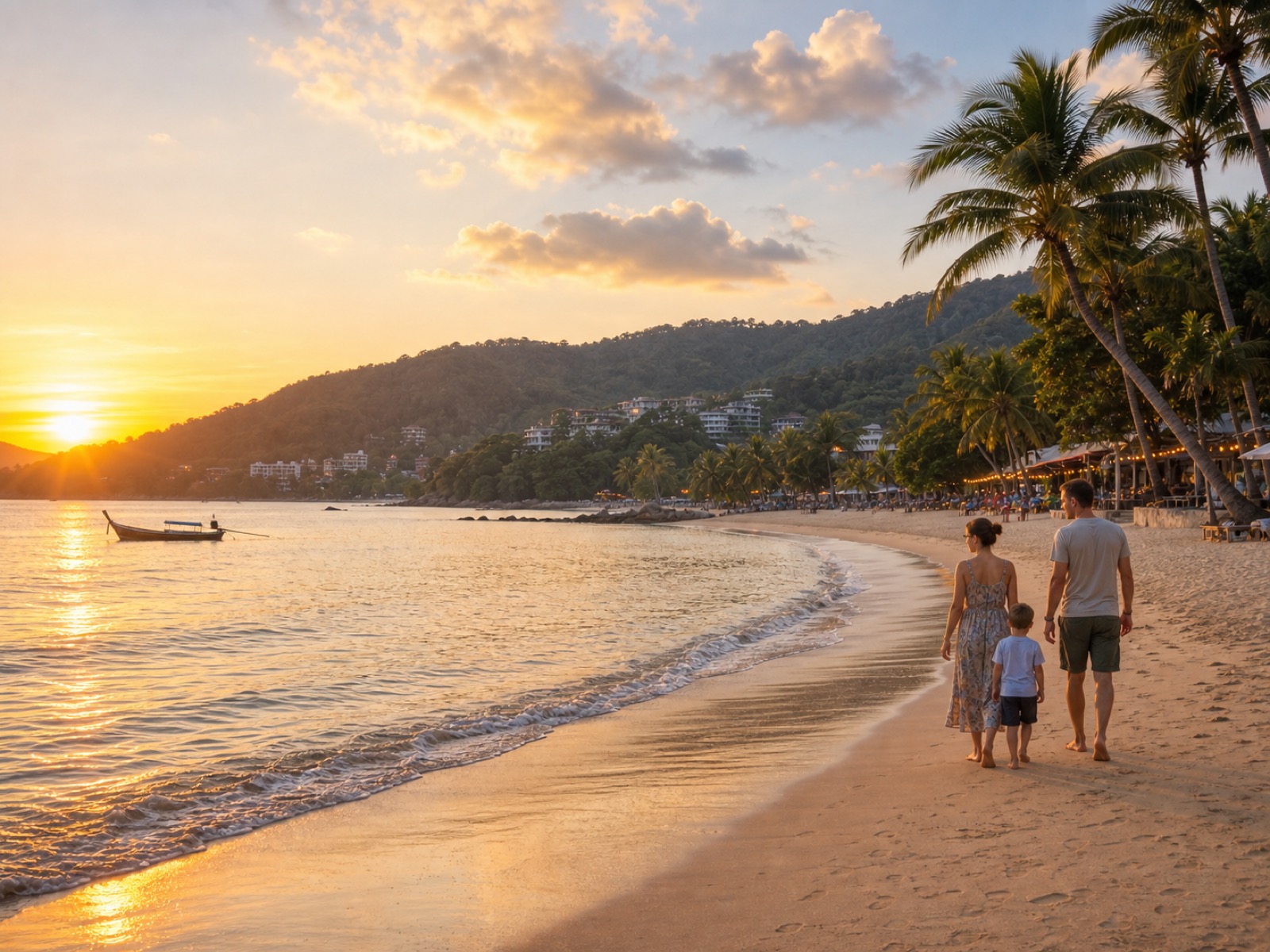
- Best conservation story: Mai Khao and Nai Yang because of Sirinat National Park and turtle-conservation awareness. Check the official Sirinat National Park information before visiting the north.
- Best clean-feeling resort compromise: Layan and Nai Thon, because they are scenic without the same crowd load as central Patong or Kata at peak time.
- Best walkable lower-impact base: Kata or Kamala if your hotel is nearby and you can avoid daily taxis.
- Best for kids: Nai Yang, Kata, Kamala, and parts of Bang Tao. For calmer-water planning, use the family beach guide.
- Best snorkeling with care: Ao Sane and Ya Nui in calm conditions, but only if you avoid standing on coral or touching marine life. Pair with the snorkeling beaches guide.
Responsible Beach Habits
Reef-safe behavior, plastic, sunscreen, flags, and wildlife
Phuket's beaches need good visitors as much as good management. The same beach can be beautiful in the morning and messy after a busy afternoon. During monsoon months, debris and rough sea conditions can change quickly, so check the Thai Meteorological Department forecast and respect red flags.
- Bring a refillable bottle: this is the easiest win in Phuket's heat.
- Skip single-use beach snacks: small wrappers and cups are exactly what end up in sand and drains.
- Use sunscreen carefully: apply before the beach, let it absorb, and avoid smearing fresh sunscreen directly before snorkeling.
- Do not touch coral or marine life: float, watch, and keep fins away from rocks and reef patches.
- Leave wildlife alone: never disturb turtle areas, nests, birds, crabs, or anything that looks protected.
Want a cleaner, lower-impact Phuket beach day?
Send me your hotel area, travel month, and whether you want swimming, kids, snorkeling, or quiet walking, and I can suggest a beach plan that avoids unnecessary driving and crowd pressure.
How to Plan a Low-Impact Beach Day
Transport, timing, food, water, and cleanup mindset
The cleanest plan is usually the simplest plan. Choose one beach near your hotel area, arrive early, bring what you need, eat locally, and avoid turning a calm beach day into a long taxi circuit. If you are still choosing where to sleep, start with the Phuket west coast vs east coast guide.
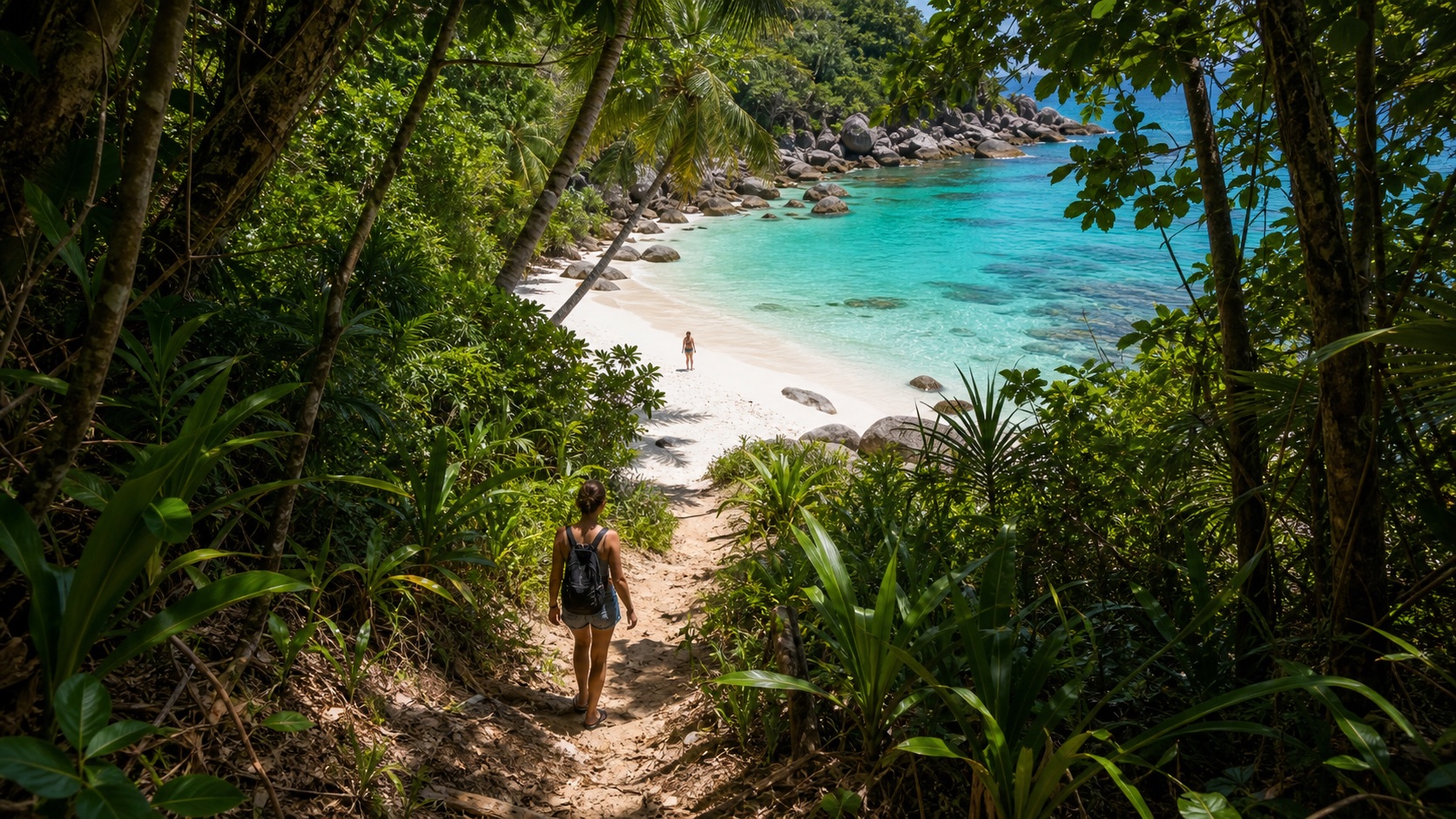
- North Phuket stay: choose Mai Khao, Nai Yang, or Nai Thon.
- Bang Tao or Laguna stay: choose Layan or the quieter northern end of Bang Tao.
- Kata/Karon stay: choose Kata for walkability or Nai Harn for a greener southern day.
- Long-stay or repeat visitor: add a beach cleanup morning or community tourism day such as Bang Rong.
My Honest Recommendation
Where I would send eco-minded travelers
If sustainability is your priority, I would start with Mai Khao or Nai Yang for the north Phuket conservation context. If you want cleaner-feeling water and a proper beach day without going remote, I would choose Nai Thon, Layan, Surin, or Nai Harn depending on where you are staying.
For most families, the best answer is not the wildest beach. It is the beach with shade, toilets, easy food, and short transport. For couples and repeat visitors, the best answer is often a quieter beach reached early with a small bag and no rush.
The island does not need perfect travelers. It needs visitors who make small good decisions all day: refill, reuse, respect flags, avoid wildlife disturbance, and leave the beach a little better than they found it.